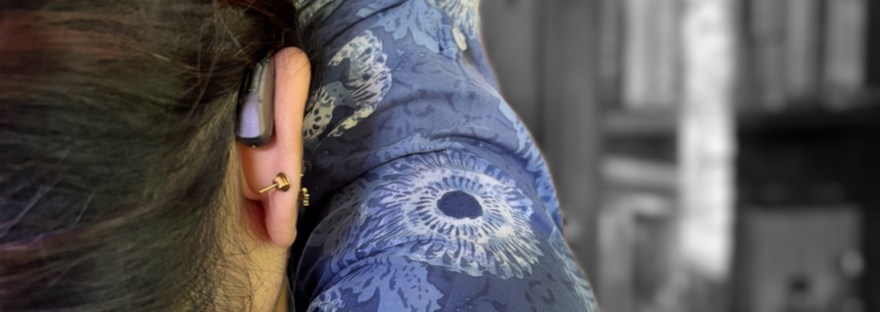
Over the past five years, ‘disabled’ has become one of the hyphens in my identity. This is especially true at workplaces, where my disability has a direct impact on how I engage in professional spaces. As someone with a largely “invisible” disability, most people cannot tell that I am disabled. I walk around without my cane unless I really need it, and my hearing aid is tucked behind my ear. But, I have been vocal about my disability from the day it began, even if it meant that I was excluded from opportunities.
I have discovered that disability-related workplace burnout hits differently from the burnout that able-bodied persons experience. The world today is driven by ‘the hustle’, and if you are a disabled person who is not capable of fitting into this mold, you fall behind. You push yourself, attending meetings while lying down, or working extra hours to ‘make up’ for the times you have been sick. I work at a really supportive workplace, but the very nature of the sector is to burn the candle at both ends. All of this is because our lens remains exclusionary; our systems, institutions, ways of thinking, and workplaces are rigid.
Lately, I have been thinking about how workplaces that do not work on disability rights can be more inclusive. Disabilities are complex and diverse; every disabled person might need support that is unique to them, and creating space for all this diversity is truly challenging.
So, what would inclusive spaces look like? From the use of inclusive language, to making physical spaces accessible, and incorporating flexibility within the very design of the organisation. In my experience, most organisations just learn along the way, based on the specific disabilities that their employees have, and that is also only if they are open to creating the space for the disability. This approach of ‘experiential learning’ is not necessarily a bad thing, as it addresses the specific needs of the disabled employee. However, when institutions are not built to be truly inclusive, the underlying exclusion bias sneaks in.
In the twelve years that I have worked in the development sector, I have engaged with nine organisations in some capacity or the other; only two or three of them have had disabled employees during that period. This is particularly interesting, given the emphasis on inclusion and equity in the sector. We talk about marginalisation (social and economic), but where are the persons with disabilities? How many of the organisations that you have worked at have had disabled people? This is not to say that there is a conscious effort by all of them to exclude persons with disabilities, but clearly something is going on.
A lot of this resistance to creating inclusive spaces for disabled people, conscious or not, comes from the external perception of it being the person’s primary identity. But, I am not only a disabled person; I am disabled and…
The flaw is in the design, and exclusion is part of the culture. The moment we recognise all the things that come after the ‘and’, and perceive it as being as relevant and ‘normal’ as our gender, age, social background, etc., we can truly become inclusive.
Article by Roshini Suparna Diwakar
PS – I have used ‘disabled people’ and ‘persons with disabilities’ interchangeably in this article, though I am aware of the nuance and discussion around the terms. Regardless of whether one considers themselves as disabled because the world by its very nature is inaccessible, or one believes that they are a person with a disability where the illness is just a part of their lived experience, I think my larger point stands. If you identify as the former, you will have other identity markers along with being disabled, and if you relate to the latter, inaccessible barriers will impact your everyday experience as a person with a disability.

 THE GLASS ELEVATOR